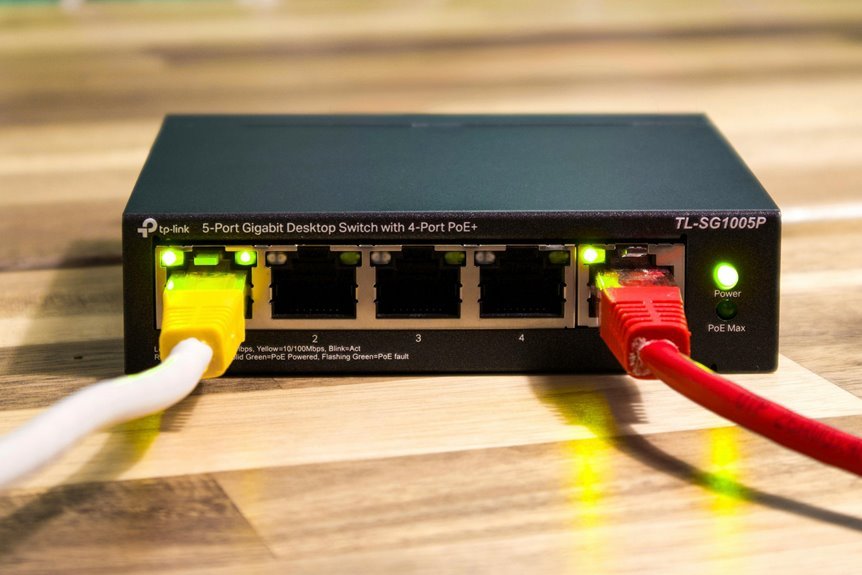
High Performance Web Service 211530312 Explained distills latency budgeting, non-blocking I/O, and disciplined thread management into a practical framework. It emphasizes event-driven queues, minimal blocking, and rapid task handoffs to sustain throughput. Data access combines caches with durable stores and clear read-write guarantees. Observability, fault tolerance, and precise instrumentation enable predictable behavior under load. The discussion culminates in a concrete roadmap for deployment and capacity planning, inviting the reader to examine concrete trade-offs and implementations.
What Makes a High-Performance Web Service Tick
Performance in a high‑performance web service hinges on minimizing latency, maximizing throughput, and ensuring predictable response times under load. The system optimizes resource allocation through latency budgeting, aligning tasks with predictable budgets. Thread affinity is employed to improve cache locality and reduce context switches. Architectural discipline, measured instrumentation, and disciplined deployment choices enable disciplined freedom to scale without compromise.
Non-Blocking I/O and Efficient Concurrency Patterns
Non-blocking I/O and efficient concurrency patterns are foundational to sustaining low latency under high load. The design favors event driven queues and minimal blocking paths, enabling rapid task handoffs between workers.
Precision in scheduling avoids wasteful context switches, while backpressure signals align throughput with capacity. This approach preserves responsiveness, scales horizontally, and supports freedom through predictable performance and lean architectures.
Scalable Data Access: Caches, Storage, and Read-Write Consistency
Efficient scalable data access combines caching strategies, storage architectures, and explicit read-write guarantees to sustain throughput under growing load.
The discussion emphasizes latency budgeting and disciplined cache invalidation to prevent stale reads while preserving throughput.
A balanced approach aligns in-memory caches with durable stores, ensuring consistent ordering and recoverable state, enabling scalable data access without sacrificing freedom or clarity for developers.
Observability and Reliability: Metrics, Tracing, and Fault Tolerance
Observability and reliability form the backbone of a resilient web service, defining how metrics, tracing, and fault tolerance translate into actionable insight and predictable availability.
The discussion highlights observability latency as a measurable signal guiding capacity, latency, and error budgets.
It emphasizes disciplined instrumentation, proactive alerting, and robust failover strategies, underscoring reliability fault tolerance as essential for freedom-loving, high-performance systems.
Conclusion
In sum, a high-performance web service delivers ultra-low latency and sustained throughput through disciplined deployment, non-blocking I/O, and precise task handoffs. Event-driven queues, selective blocking, and robust concurrency patterns avoid stalls while preserving throughput budgets. Scalable data access combines caches with durable stores and clear read-write guarantees. Observability, fault tolerance, and proactive instrumentation ensure predictable behavior under load, enabling faster iterations and reliable capacity planning. Like a modern caveman streaming viral memes on a smartwatch, performance remains relentlessly immediate.