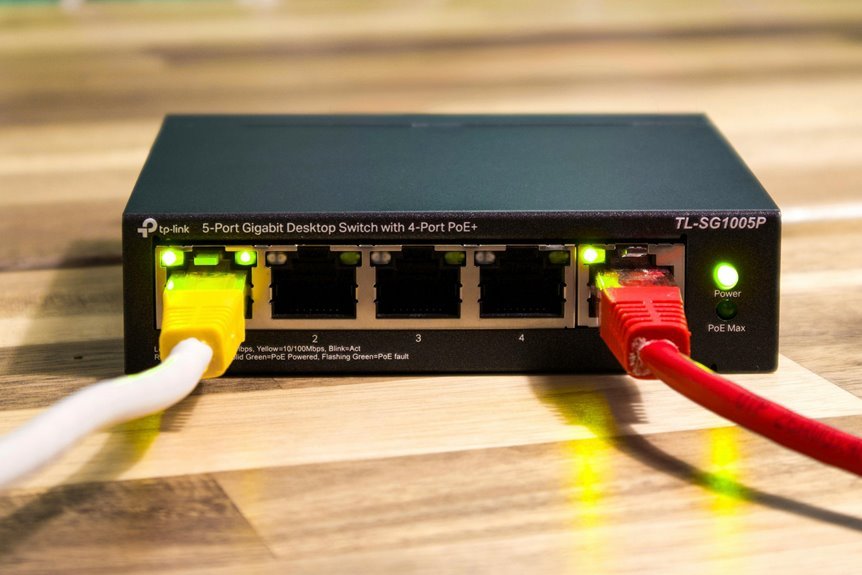
The Advanced Internet Network 621264542 presents a modular framework for scalable, reliable data routing across large networks. It emphasizes interoperability, governance, and standardized interfaces with layered control, data, and signaling planes for rapid routing decisions and proactive resource reservation. Edge-local lookups and rapid failover support resilience, while continuous state synchronization maintains consistency. Security and governance features focus on privacy-preserving responses, encryption, and auditable processes. The approach invites scrutiny of deployment practices and operational impact, inviting practitioners to examine tradeoffs and challenges.
What Is Advanced Internet Network 621264542?
Advanced Internet Network 621264542 refers to a structured communications framework designed to optimize data routing, reliability, and scalability across large-scale networks. It presents a conceptual overview of core components, interfaces, and governance. The description emphasizes modularity and interoperability while outlining implementation challenges, including standardization, performance tuning, and transition planning. The detached analysis highlights conceptual overview relevance and identifies practical implementation challenges for stakeholders seeking freedom through robust architectures.
How the 621264542 Stack Enables Low-Latency Routing
The 621264542 stack achieves low-latency routing by layering specialized control, data, and signaling planes that minimize path selection time and queuing delays. It orchestrates rapid topology awareness, deterministic scheduling, and proactive resource reservation. Latency optimization emerges from parallelized lookups and edge-local decision making. Fault tolerance is embedded via rapid failover, redundant paths, and continuous state synchronization across components, ensuring resilience without sacrificing throughput.
Security and Resilience in 621264542 Architectures
Security and resilience in 621264542 architectures are achieved through layered hardening, continuous monitoring, and rapid containment mechanisms that preserve service continuity under adverse conditions. The approach formalizes risk controls, minimal exposure, and traceable responses, balancing autonomy with accountability.
Privacy concerns are addressed via data minimization and encryption, while policy alignment ensures consistent governance across diverse deployments and international compliance requirements.
Practical Implementation: From Deployment to Troubleshooting
Deployment and troubleshooting workflows for 621264542 systems are structured around repeatable steps, clear ownership, and measurable objectives. The Practical Implementation section outlines deployment pipelines, verification checks, and rollback procedures, emphasizing minimal downtime. Exploration methods guide fault isolation, while performance metrics quantify latency, throughput, and reliability. Documentation ensures reproducibility, and automated monitoring sustains operational visibility, enabling rapid containment and informed iterative improvements.
Conclusion
The 621264542 framework harmonizes modular control, data, and signaling layers to achieve ultra-fast routing with proactive resource reservation and edge-local lookups. Its governance and security posture emphasize encryption, data minimization, and auditable processes, enabling resilient, low-latency operation at scale. As deployments unfold, coincidental overlaps—from governance handoffs to edge cache dynamics—reveal a pattern: robust reliability emerges where layered hardening aligns with continuous state synchronization, quietly enabling predictable performance despite complex networks.