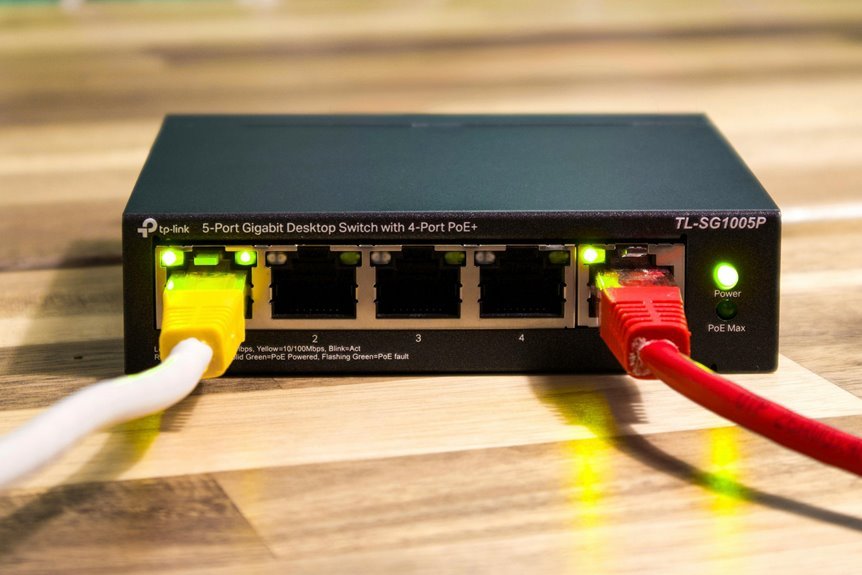
The High Quality Digital Network 920302108 Guide presents a structured vision for scalable, resilient networks. It emphasizes disciplined decisions on topology, hardware, and cabling to optimize latency and throughput. Continuous monitoring and end-to-end evaluation frame capacity planning and reliability under dynamic conditions. Governance, standards, and quality assurance anchor progress while balancing security with openness. The framework invites scrutiny of measurable milestones, inviting further exploration of how these elements interlock to support future growth.
How to Build a High-Quality Digital Network Foundation
A high-quality digital network foundation begins with a clear architectural vision that defines objectives, capabilities, and performance targets. The framework articulates governance, standards, and alignment with strategic needs, guiding implementation. A disciplined approach enables scalable, resilient growth, balancing security with openness. Clear metrics drive evaluation, while phased milestones preserve momentum. two word idea, two word idea.
Selecting Topology, Hardware, and Cabling for Speed
Selecting topology, hardware, and cabling for speed requires a deliberate, evidence-driven approach. The analysis compares network segments, identifies bottlenecks, and aligns components with performance targets. Emphasis rests on latency optimization and predictable behavior. Cabling standards influence interference and error rates, while hardware choices determine processing headroom. A structured decision framework ensures scalable, reliable speed improvements without compromising compatibility or maintainability.
Optimizing Latency, Throughput, and Reliability in Practice
Latency, throughput, and reliability are optimized through a disciplined, data-driven workflow that identifies performance gaps, quantifies impact, and verifies gains under realistic workloads; continuous monitoring informs iterative adjustments.
Latency optimization focuses on end-to-end paths, buffering, and queuing disciplines.
Throughput tuning targets bottlenecks, parallelism, and efficient resource allocation, while reliability strategies stabilize variance and maintain service levels across dynamic conditions.
Securing and Scaling Your Network for Future Growth
Securing and scaling a network for future growth builds on prior latency and throughput optimizations by aligning protection, policy, and capacity with evolving demand.
The approach emphasizes planning security, scalable architectures, and robust governance.
Scalability modeling informs capacity decisions while quality assurance continuous verifies reliability.
Clear metrics, repeatable processes, and disciplined risk management enable resilient expansion without compromising performance or freedom of choice.
Conclusion
In the pursuit of a High Quality Digital Network, momentum builds as each decision tightens the weave of topology, hardware, and cabling. The metrics whisper: latency drops, throughput rises, reliability steadies. Yet the watchful eye notes evolving demands and unseen bottlenecks. As governance and continuous monitoring tighten the loop, teams await the moment when capacity meets the next challenge. The conclusion remains just ahead, a poised threshold where resilience and future growth converge, and the system truly proves itself.